Farida joins the Barents Observer news team
"Moscow’s repression only spurs me on to work even harder and speak out even more forcefully against the lawlessness in Russia," says Farida Kurbangaleeva. The experienced journalist has been hired as news editor for the Barents Observer’s Russian-language service.
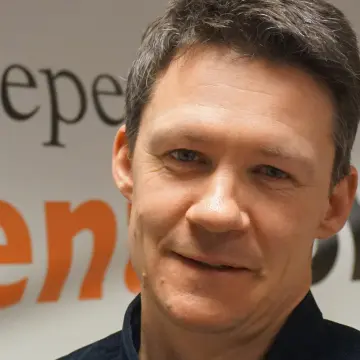
Kurbangaleeva, a Tatar journalist known for her independent reporting and unwavering stance on press freedom, will join the news team based in Kirkenes, northern Norway.
Before Russia’s annexation of Crimea and the invasion of Donbas in 2014, Kurbangaleeva worked in Russian state media. She subsequently left the country and has since contributed to several Russian-language exile media outlets in Europe.
Her independent journalism has led to her inclusion on Moscow’s list of so-called "foreign agents" and her conviction in absentia on charges of "justifying terrorism and extremism" and "spreading fake news about the Russian army." She is also on the regime’s wanted list.
Kurbangaleeva emphasises the severe repression faced by free and independent voices in Russia. "Many of my colleagues who chose to remain in Russia have ended up behind bars simply for speaking and writing the truth. Meanwhile, the Russian authorities are also persecuting those journalists who have chosen a life in exile: almost all of us are labelled "foreign agents" and are defendants in various criminal cases."

Born and raised in Kazan, Kurbangaleeva is Tatar by nationality. Regional policy and minority issues will form part of her focus at the Barents Observer. "I am certainly interested in the ‘national question’ in Russia’s regions—such as discrimination against national languages, restrictions on self-governance, and any manifestations of Russian imperialist thinking and chauvinism. I have often addressed these issues in my previous work, and I expect to continue doing so in my new role."
Having left Russian state TV Vesti 12 years ago, she retains a clear understanding of its operations. "I have a good grasp of how propaganda channels function internally—how certain decisions are made and how specific reports are produced," she explains. "Sensible people around the world already know that Russian propaganda lies constantly."

Since the start of Russia’s full-scale war against Ukraine, the Barents Observer has established a unique news desk staffed by Russian-language journalists in exile. The newspaper now employs a team of four Russian-language journalists in exile, all of whom are listed as "foreign agents" by Moscow and have been repeatedly fined by Russian authorities for their independent reporting.
The Barents Observer’s Russian-language news team is supported by the Tinius Trust, UiT The Arctic University of Norway, the Norwegian Ministry of Foreign Affairs, and the Fritt Ord Foundation.