
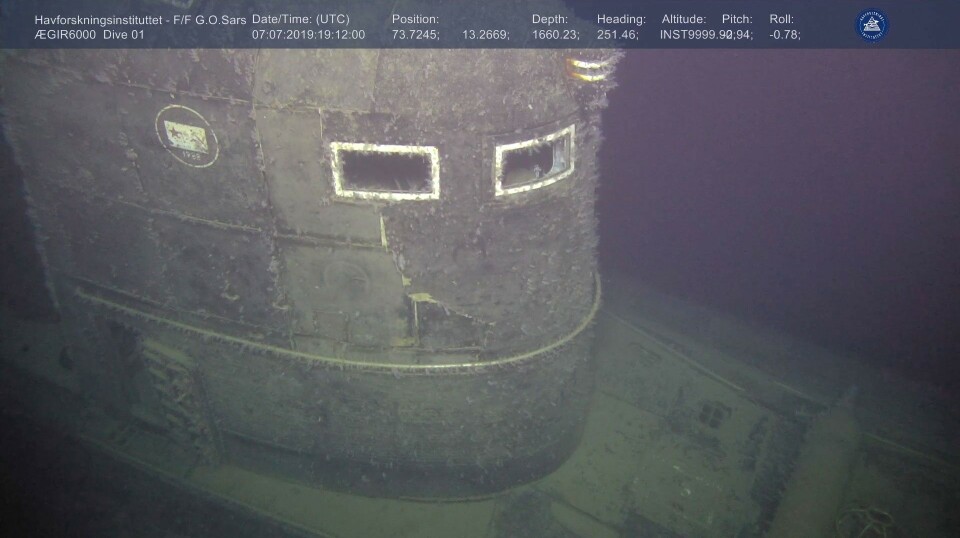
37 years on, no signs of leakage from plutonium warheads
Results from two new studies of seabed sediments near the sunken nuclear-powered submarine Komsomolets (K-278) in the Norwegian Sea show no plutonium contamination above natural background levels.

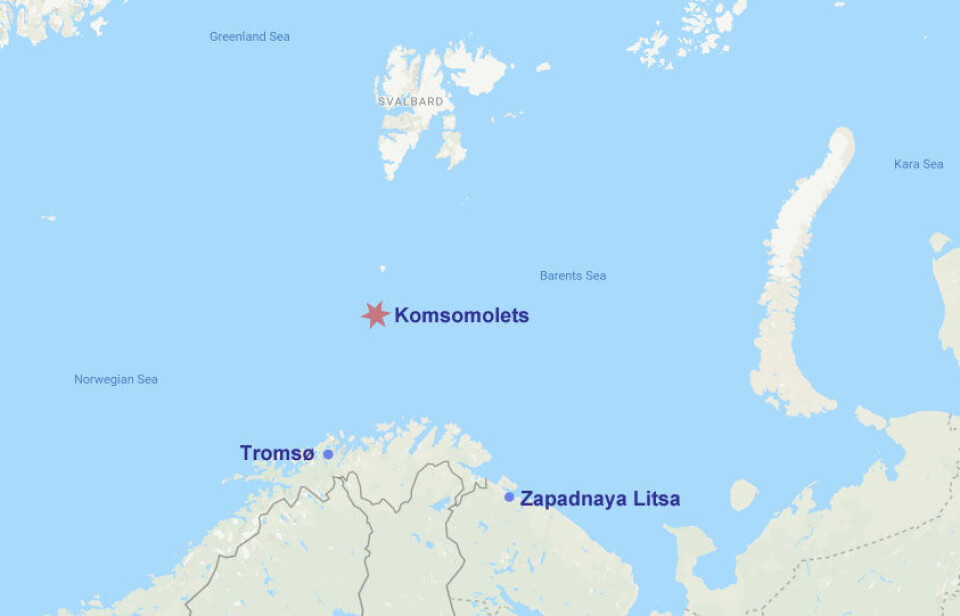
The submarine, which contains one nuclear reactor and two plutonium warheads, lies on the seafloor approximately 250 kilometres southwest of Bear Island. Since its sinking on 7 April 1989, there have been concerns that radioactive leakage could affect the marine environment.
The Norwegian and Barents Seas are among the world’s most productive marine ecosystems and support some of the largest fish stocks on the planet.
However, two recent studies - one Russian and one Norwegian - found no evidence of weapons-grade plutonium in sediments or seawater near the wreck.
The Russian study, conducted by scientists from the Russian Academy of Sciences, is based on samples collected during the 68th expedition of the research vessel Akademik Mstislav Keldysh. The vessel has visited the wreck site multiple times since the early 1990s.
“The activity of plutonium isotopes ²³⁹⁺²⁴⁰Pu and ²³⁸Pu in bottom sediments at the site corresponds to background levels for the Arctic. This indicates that the submarine’s hull is currently effectively containing hazardous materials,” said Artyom Paraskiv of the A.O. Kovalevsky Institute of Biology of the Southern Seas. The findings were published this week in the journal Marine Pollution Bulletin.
Previous joint Norwegian–Russian studies have detected releases of radionuclides from the reactor via a ventilation pipe, but the two plutonium warheads are believed to remain intact. This is despite significant damage to the submarine’s forward section, including both the outer hull and the inner pressure hull, particularly around the torpedo compartment.
The warheads are mounted on torpedoes.
A Norwegian study, published in March and based on earlier expeditions to the Komsomolets, reached a similar conclusion:
No evidence was found of plutonium in the surrounding environment near the damaged forward section of the submarine originating from the nuclear warheads.”
Leakage of caesium-137 and strontium-90 from the nuclear reactor has been confirmed, but there is no evidence that these isotopes are accumulating in the marine environment.
The highest levels recorded were around 800 becquerels per litre of seawater inside the wreck’s pipe systems. By comparison, typical levels in the Norwegian Sea today are around 0.001 becquerels per litre—meaning the measured samples were approximately 800,000 times higher than normal.
Despite more than 30 years of releases from the reactor, there is little evidence of any build-up of radionuclides in the surrounding environment, as they appear to be rapidly diluted in seawater," according to the Norwegian report.
These findings have previously been reported by the Barents Observer.
The Russian expedition to the wreck site formed part of a broader study of plutonium contamination on the Arctic seabed. In total, sediment samples from 22 sites across the Norwegian and Barents Seas were collected and analysed.
The highest plutonium levels were found north of Novaya Zemlya in the Russian Arctic, originating from global fallout from nuclear testing in the 1950s and 1960s.
"The highest 239+240Pu activity concentrations were identified north of Novaya Zemlya archipelago and reached 2314 ± 178 mBq·kg−1," the Russian study said. Although 3-4 times higher than normal background, the results pose no risk to marine life of humans.
Novaya Zemlya served as the Soviet Union’s primary testing ground for thermonuclear weapons. Between 1954 and 1990, a total of 224 tests were carried out across the archipelago, 88 of which were detonated in the atmosphere. The most powerful of these was the so-called Tsar Bomba, detonated on 30 October 1961, with a yield of 58 megatons - around 4,000 times more powerful than the bomb dropped on Hiroshima.
The Barents Observer has previously reported that radioactive material from this testing programme is now leaking into the marine environment. As the Arctic warms, glaciers on the northern island of Novaya Zemlya are melting, releasing fallout that had long been trapped in the ice.
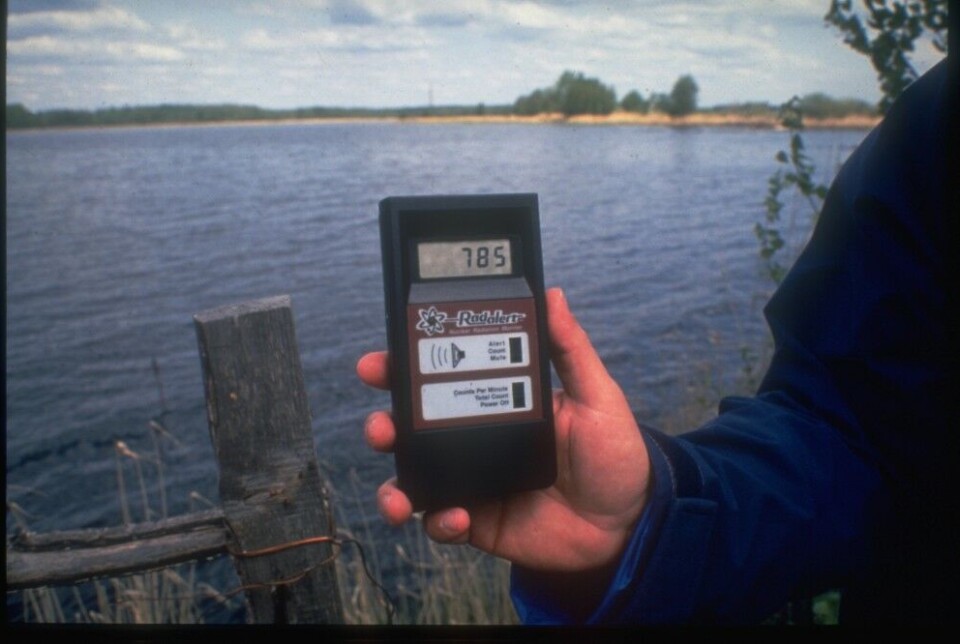
Another potential source of plutonium in sediments north of Novaya Zemlya is the release from the Mayak plant, located north of Chelyabinsk in the southern Urals.
Significant discharges of radionuclides occurred between 1949 and 1951, when cooling water from the Soviet Union’s first plutonium production reactor was released into the Techa River. From there, it flowed into the Irtysh River and continued northwards via the Ob River, eventually reaching the Kara and Barents Seas.
Soviet scientists detected plutonium in sediments in the Ob Bay, east of the Yamal Peninsula, as early as 1951.


