

“My grandmother gave me this name so that I would do something with it”
Twenty years ago—on 7 October 2006—journalist and writer Anna Politkovskaya was shot dead in the stairwell of her apartment building in Moscow. Her granddaughter Anna was born after her murder: she lives in Europe, studies politics, and plans to devote her life to it.
Anna Politkovskaya was killed as she returned home. The perpetrators and organisers of the murder were convicted, but the person who ordered the killing has never been identified. One of the organisers, Sergei Khadzhikurbanov, received a pardon in 2023 after taking part in the war in Ukraine. The Novaya Gazeta journalist spent years writing about the war in Chechnya, abductions, torture, extrajudicial killings, and other human rights abuses.

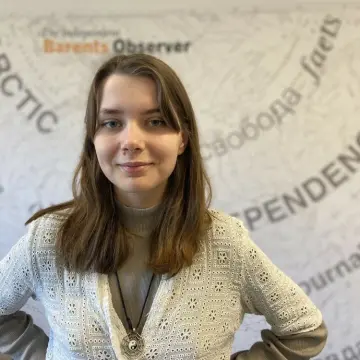
We met her granddaughter 19-year-old Anna-Victoria Politkovskaya in Strasbourg at a conference of the Anti-War Committee. Afterwards, Anna travelled to the European Parliament, where she urged MEPs to create a mechanism for issuing emergency humanitarian visas to Europe. She is now studying political science in the Netherlands. Her name, she says, gives her a platform to be heard and to speak publicly about what matters to her. But that was far from always the case.
"While I lived in Russia, my name brought me nothing but negative connotations. When I began to understand myself and to associate myself with this name, it seemed like something bad. Around me were people—classmates, and later other acquaintances—who believed that if I came from that family, then I was an enemy of the people, someone untouchable," Anya recalls.
One such episode occurred when she was in the 7th grade. During a lesson, the conversation turned to Vladimir Putin, and a classmate turned to her and asked what she thought of him. "I told my classmates: I cannot support those people, that regime, which literally killed a member of my family. I didn’t know who specifically gave the order to kill my grandmother. But I understood it was someone close to him. I cannot support Putin."
I told my classmates: I cannot support those people, that regime, which literally killed a member of my family. I didn’t know who specifically gave the order to kill my grandmother. But I understood it was someone close to him. I cannot support Putin."
Her first attempt to make sense of her family’s history came when she was eleven. She had just been given her first smartphone, and one day on YouTube she came across a comment under a video by Aleksei Navalny that read: "Politkovskaya was right."

"I thought: why am I seeing my surname? I simply opened Google, typed in ‘Anna Politkovskaya’, and started reading the Wikipedia article about my own grandmother. Then I got up, went into the next room to my mum and said: ‘Now you tell me everything that happened."
The conversation, Anya says, lasted several hours. Gradually, she began reading her grandmother’s own articles, learning about the Chechen wars, Beslan, Nord-Ost, and the role Politkovskaya had played in all of these stories.
"They said they would kill me just like my grandmother"
"Mum always told me: if anything goes wrong, we go to an embassy of some country and leave. In 2022, that’s exactly what happened," Anya says.

On 24 February 2022, her mother woke her with the words: "Anya, the war has begun." That day, at her Moscow school specialising in Spanish, the maths test was replaced by a form class. The teacher explained the "reasons" behind the so-called special military operation.
"I raised my hand and said: ‘Don’t you understand that war is bad? Don’t you understand that killing other people is bad? Ukraine is a sovereign state with a right to its own borders and its own people. And no country has the right to invade another.'"
I raised my hand and said: ‘Don’t you understand that war is bad? Don’t you understand that killing other people is bad? Ukraine is a sovereign state with a right to its own borders and its own people. And no country has the right to invade another"
"Why do you act like you’re special, like you’re not the same as everyone else?" a classmate asked.
Several weeks later, after evidence emerged of the killing of civilians in Bucha, she raised the war with her classmates again. She had read a Meduza article about the occupation of the town in the Kyiv region. The conflict then spilled beyond schoolyard conversations.
"At some point I realised this was absolutely unacceptable, so horrific, that it had to be spoken about. I came to school and started telling everyone: guys, Bucha is really bad. What the Russian army has just done is literally genocide of the Ukrainian people in Bucha."
A few days later, classmates reminded her of her speech in the school group chat. They accused her of "sticking out too much" and talking about the war too often.
"They said they would kill me just like my grandmother. That was a direct quote from a classmate who simply wrote in the group chat that if I didn’t stop talking, my house would be burned down and I would end up like my grandmother."
The threats continued—messages came from classmates’ parents and from unknown numbers. About a week later, Anya received a call: "Look out of the window." Almost immediately, a photo taken at that very moment from the street arrived on her phone, along with the message: "We know where you live. Our threats are real."
After that, Anya all but stopped leaving the house, and her mother began preparing the family’s emergency departure from Russia. A few weeks later, Anya and her mother packed their belongings, put their cat, Banana, in the car, and left Moscow.
On the eve of their departure, Anya went to say goodbye to her best friend—a friendship of nearly ten years. She told him she was leaving Russia because of the war and that they might never see each other again. In response, she heard that she was betraying him and her country.
"He was my closest childhood friend. I walked out of his flat, and we never spoke again. In that moment, I realised there was nothing left for me in this country. Because the person closest to me had just turned his back on me over politics."
"My home is wherever I am, with my cat"
Anya, her mother—journalist Vera Politkovskaya—and Banana reached Latvia safely. There, Anya enrolled in an international school and continued studying languages. Today, besides Russian, she speaks English, Italian, Spanish, Latvian, and French.
"I was very lucky, because my emigration was relatively easy. In Latvia, where we first arrived, I constantly heard Russian spoken on the street."
Anya says she misses Moscow, though she admits this is largely romanticised.

"I thought that by now I’d be in my third year at university and living in my own flat in Moscow. But for some reason, I’m in Strasbourg. I don’t know what things will look like in twenty years, but I really hope to go back to Russia at some point. Not necessarily to move back—just to visit. I want to see the place where I grew up through adult eyes."
Over her years in exile, her old notion of home has dissolved: it is no longer one flat or one city, but the places and people she is gradually gathering around herself anew:
"My home is wherever I am, with my cat," she says.
After Riga, the family moved to Rome, and in 2025 Anya left to study in the Netherlands, where she is now reading political science. With each move, her sense of home has become less tied to any particular place. In Amsterdam, Anya built a circle of Russian-speaking friends—young people who, like her, had left Russia and had already lived in several countries.
Once a month they gather at her flat, shop at an Eastern European grocery for Kirieshki crisps and beer, sing songs, and smoke Chapman cigarettes brought from Russia:
"This is my little island of what I could have had in Russia," Anya says. "I found my own crowd in Amsterdam. Everyone here knows that Anya Politkovskaya hosts house parties."
In the Dutch capital, Anya met the street singer Diana Naoko, who had been forced to leave Russia after performing songs by so-called "foreign agents" in St. Petersburg. Diana worked for a company organising events featuring Russian-speaking artists and creators. The two became friends.
In November, Politkovskaya will begin an internship at the European Parliament, assisting Pina Picierno, Vice-President of Italy—a prominent Italian politician with a consistently pro-Ukrainian stance who champions democratic values. Anya will spend several months in Brussels and later hopes to try her hand at journalism.
"I spend a lot of time with members of the Russian opposition. There, you can meet people, come up with ideas, run projects. But larger goals can only be achieved within European institutions. That’s why I keep pushing—and somehow, it’s working."
Not only a curse, but also a blessing
In her recent address to the European Parliament, Anya shared the story of her friend Sasha. He grew up in the North Caucasus and, she says, suffered sexual assault at the age of sixteen. Sasha wanted to leave Russia but was unable to move to a country where he would be safe. Later, he took his own life.
Their families had been linked across generations: once, her grandmother Anna Politkovskaya helped save the life of Sasha’s father. "Much of what I do in life, I do for him and for my grandmother," Anya says.
She often returns to the question of what drove Politkovskaya, time and again, to take up other people’s stories and risk herself for strangers. If Anya could ask her grandmother just one question, it would be about exactly this.

"What drove her when she defended people? What specifically made her want to fight for other people’s lives? I want to—but I simply don’t yet have the tools to do it. I would love to do the same. But I understand the bar is set very high."
Anya never met her grandmother. When Politkovskaya was killed, Anya’s mother was five months pregnant. Anya says it was her grandmother who asked her mother to name the future child Anna.
"She came to Mum’s home and said: ‘Please name your daughter after me.’ Two days later, my grandmother was murdered. It was one of her last wishes. Everyone understood perfectly well that her life was in danger."
Because of the threats, the bullying at school, and the fear for her life, Anya did not see her name as a gift. Quite the opposite.
"For a long time, I thought her request was a kind of curse she had placed on me. But at some point, I understood that it wasn’t only a curse—it was also a blessing. After I left Russia, I realised that being Anna Politkovskaya isn’t so bad. My grandmother gave me this name so that I would do something with it."
My grandmother gave me this name so that I would do something with it."
Asked what her grandmother might say to her if they could meet, Anya replies:
"I think she would just worry about me, like any grandmother. Whether everything’s all right, whether I’m happy, whether things are generally okay in my life. I think she would just be an ordinary grandmother who would sometimes cook for me when I came to visit. Most likely, she would be very busy all the time."


