

Norway’s “fisheries capital” relies on Russian vessels
Norwegian sanctions against Russia are backfiring on parts of the country’s own fishing industry. The small fishing town of Båtsfjord on the coast of Finnmark is currently bearing the brunt.
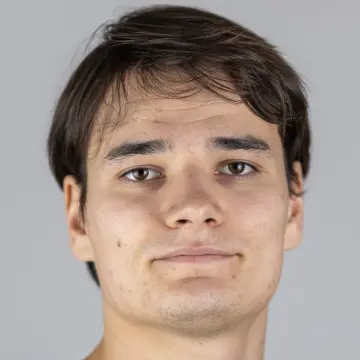
“We live entirely off fish,” says Frank Kristiansen, managing director of Båtsfjord Sentralfryselager, reflecting from the perspective of his home municipality of Båtsfjord.
He speaks not only as a business leader, but as a member of a community that has for decades earned its reputation as Norway’s “fisheries capital”. Drive into the village and the road signs make it unmistakably clear where you are.
Sanctions affecting Båtsfjord
-
Limited port access
As a reaction to Russia's full-scale war against Ukraine, Norway decided to limit port access for Russian vessels. The restriction limits port access all the way to Kirkenes, Båtsfjord and Tromsø.
-
Repairs on Russian vessels
"Professional assistance" for Russian vessels has been banned, and Norwegian companies are prohibited to provide repairs.
-
Sanctioned vessels
The two largest fishing companies in Russia, Murman Seafood and Norebo, are neither allowed to fish in Norwegian economic zone, nor to dock up at Norwegian ports.
-
Quotas at the Barents Sea
Each year the Norwegian-Russian Fisheries Commission regulates the fishing activity in the Barents Sea by means of quotas. After record-long negotiations in December 2025, the commission agreed on the lowest cod quotas since 1991. Cod quotas, however, are not a sanction.
Båtsfjord Sentralfryselager plays a key role in maintaining that reputation. Fishing vessels dock at the local port to deliver their catch to the company Kristiansen represents, which stores the fish before distributing it to markets around the world.
“Our job is simple, but it relies on volume,” he explains.

Russian deliveries are key to maintaining that volume. Under normal circumstances they account for up to 50 percent of the company’s revenue, according to Kristiansen. This year, however, traffic at the port has changed.
Sanctions have been imposed on Russian vessels and many of his main customers have been excluded. At the same time, cod quotas are now the lowest since 1991. The ripple effects have already hit Kristiansen’s business.
“Activity levels have dropped significantly. Fewer people are working, three employees have been temporarily laid off and others have left. For us, that amounts to a 40 percent reduction in work capacity,” he said in an earlier interview with the Barents Observer.

“The fish will find its way to the market”
Although Kristiansen emphasises the importance of sanctions, he argues that banning his customers is the wrong approach if the goal is to halt the trade.
“We are not against sanctions; we fully understand them, because they can help bring the war to an end. The challenge is that the fish will find its way to the market regardless. The sanctions do not prevent the fish from reaching the global market. It will simply find other routes,” he says.
According to Kristiansen, much of the money invested in Båtsfjord ultimately flows back to Russia and other distributors.
Half of the frozen fish he receives at the port is Russian, he says. Of that share, he estimates that the companies Murman Seafood and Norebo usually account for 70–80 percent of deliveries, or around 35–40 percent of total shipments.

Both companies are among Russia’s largest fishing enterprises. Their vessels were highlighted in the EU’s 17th sanctions package in May 2025, accused of intelligence gathering and damaging subsea cables. However, the vessels were sanctioned primarily over fears of espionage, rather than to halt trade.
“Is it wrong to have customers who are essentially accused of intelligence gathering?”
“We’ve had thirty years of Russian fishing activity in our fjord. What is it about our coast that they don’t already know? If espionage is the concern, you might prefer to have them close by and under observation rather than at a distance, where you lose oversight,” he replies.

Kristiansen says the reasons behind the sanctions were initially unclear to him. He was never provided with an official explanation and has instead relied on public statements and media reports.
“We have not had any dialogue with the state. It wouldn’t hurt to receive a phone call, given that we are the ones bearing the brunt.”
Asides from the sanctions themselves, it is their consequences that worry the managing director most. Possible ripple effects have already been analysed.
€22 million revenue loss
The audit and advisory firm BDO has analysed the consequences of the disappearance of Russian activity in Båtsfjord. According to a report published in 2024, the municipality could face annual revenue losses of up to €22 million.
The report concludes that Båtsfjord will have to adapt to the sudden absence of Russian activity.
“To avoid the decline in turnover, value creation and employment that the loss of Russian activity would cause, Båtsfjord will have to adapt. At the same time, our analysis shows that several factors suggest such restructuring will be particularly challenging in Båtsfjord,” the report states.
The municipality is geographically isolated, a large share of employment is in the private sector, and most businesses are based on fishing activity. In addition, a further €20 million in loans makes the situation particularly fragile.
Morten Albertsen, managing director of Båtsfjord Port Company, explains:
“Due to unforeseen events, we had to carry out mandatory repairs and build another 500 metres of quay facilities. One of the main reasons was to meet market demand and accommodate traffic from Russian vessels. The project cost around €20 million in port infrastructure, all financed through state loans.”

The Båtsfjord Port Company is owned by the municipality. If the company cannot cover its deficits, the municipality must step in.
“The bill ultimately falls on the residents of Båtsfjord. It could mean reducing municipal services and reallocating funds usually spent on kindergartens and schools. These are social structures that are particularly important in rural districts,” Albertsen adds.
Earlier, the Barents Observer published an article about Norway’s imports of Russian cod, which reached record levels in 2025 despite the sanctions. A significant share of that cod was landed in Båtsfjord.
“Didn’t these sales compensate for the costs?”
“Our revenue isn’t necessarily generated by the fish itself. We provide services such as shore power and earn income from quay fees,” Albertsen explains.
According to figures from Statistics Norway, Russian traffic has now dropped sharply.
Export value per January 2020-2026
DROP IN IMPORT: The import of Russian cod to Norway has dropped significantly. Usually, January is one of the busiest times of the year, according to Albertsen.
He argues that compensation should come from the state, noting that all loans were issued before Russia’s full-scale invasion of Ukraine and the subsequent sanctions.
“We have suggested interest compensation. Before the war we had around €150,000 in annual interest expenses. Last year we paid roughly €1 million in interest to the state.”
Kristiansen, his neighbour and managing director at Båtsfjord Sentralfryselager, echoes the concern.
“What we lack is state compensation. Båtsfjord invested in infrastructure for future Russian vessel traffic, and the sanctions do not compensate for the losses faced by local industries,” he says.

Despite the setbacks, Kristiansen points to one positive development: the growing snow crab fishery in the Barents Sea.
“Fortunately, we have snow crab and the port infrastructure to handle it. We also commend the state for allowing 20 percent of the catch to be delivered fresh,” he adds.
Losing workers
Snow crab landings help sustain fish reception facilities. However, Båtsfjord’s fishing industry also generates revenue in other ways. Fishing companies often carry out repairs on their vessels after spending several weeks at sea.
This market is served by Barents Skipsservice, led by managing director Bjørn Aarnes, whose company was hit hard by sanctions in 2023.
“We were prohibited from carrying out repairs on Russian vessels,” Aarnes explains. “We had to interpret the sanctions carefully, as they state that providing professional assistance is prohibited. Indirectly, this also includes repairs.”
Unlike the port authority, Aarnes lost all his Russian customers.

Adaptation was swift. Since 2023, Barents Skipsservice has reduced its workforce from 30 employees to 17.
What happened to the workers who left?
“Many had to relocate or find other work in the municipality,” he says.
And where do you apply for new jobs in Båtsfjord?
“You would probably have to contact another company in the fisheries sector,” Aarnes replies.
Operating Revenue of Barents Skipsservice (2020-2024)
REVENUE: The yearly revenue at Barents Skipsservice shows the impact of the sanctions. It put a sudden stop to the company's growth.
As a managing director, Aarnes must enact difficult priorities. Normally he focuses on recruiting young workers, but when the sanctions were introduced he had to let them go first.
“We are a company that usually invests in young people. When business is growing, that is a comfortable position. But when turnover disappears overnight, you have to make tough decisions.”
For his company, Russian activity had been an important source of income. In 2022, Barents Skipsservice recorded annual revenue of approximately €3.6 million.

He is asked the same question as his neighbours.
Is it wrong to have customers who are essentially accused of intelligence gathering?
“No one has told us that Russians are spying. We have had visits from the PST, who asked whether we had noticed such activity. We provide mechanical services and have no expertise in detecting espionage,” he says, stressing that he does not oppose the sanctions themselves.
Like others at the port, he worries about the ripple effects and job losses, combined with the lack of compensation.

“We must put our own security first”
State Secretary in the Norwegian Ministry of Foreign Affairs, Eivind Vad Peterson, opposes the criticism from the municipality in the High North. While acknowledging that the sanctions create difficult conditions locally, he emphasises the government’s broader security perspective.
“Norway is facing the most serious security situation since the Second World War. Russia’s full-scale war against Ukraine is now entering its fifth year. In this situation, we must put our own security first and stand together with our allies to bring an end to Russia’s illegal war of aggression against Ukraine,” he writes to the Barents Observer.

He continues:
“To target the Russian economy and weaken its ability to wage war, the EU has introduced extensive sanctions, which Norway has joined with a few exceptions and national adjustments.”
The state secretary expresses sympathy for local communities, particularly in Finnmark, noting that Norway’s northernmost region faces especially difficult conditions.
However, Peterson points out that the government has repeatedly allocated additional funding for business support measures in Finnmark, including municipal business development funds.

Municipalities particularly affected, such as Båtsfjord, have also received targeted support, he says.
“A total of 12 million kroner has been granted over several years to four municipalities in Western Varanger for a regional restructuring programme intended to support economic transition when existing business activity disappears.”
When asked about communication between the state and local industry before the sanctions were introduced, Peterson adds:
“The government is open to continuing dialogue with municipalities on targeted measures in a challenging situation.”
Before leaving “the capital of fisheries”, Bjørn Aarnes described that dialogue as limited. While compensation has been provided, he said it amounted to little more than a temporary solution.
“As a result of the sanctions, we’ve been putting out fires — temporarily laying off workers and reducing our capacity. Local businesses are suffering. We did receive compensation, but not enough to make a real difference.”


