

Oligarch Melnichenko meets with Murmansk warmonger governor Andrei Chibis
Only a few days after publishing an essay in The Economist calling for Western restraint in the war in Ukraine, the billionaire UAE-based businessman met with the governor of Murmansk to discuss seaports and mining on the Kola Peninsula.
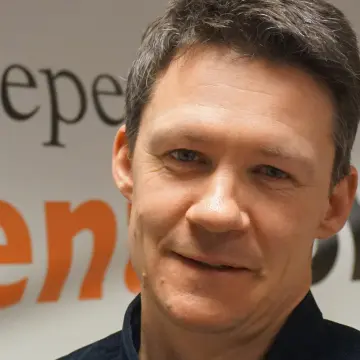
Andrei Melnichenko is Russia’s seventh-richest and the world’s 133rd-richest person, according to Forbes. A significant part of his fortune has been made on the Kola Peninsula. Melnichenko owns fertiliser producer EuroChem and coal supplier SUEK. He also controls the Murmansk Seaport.
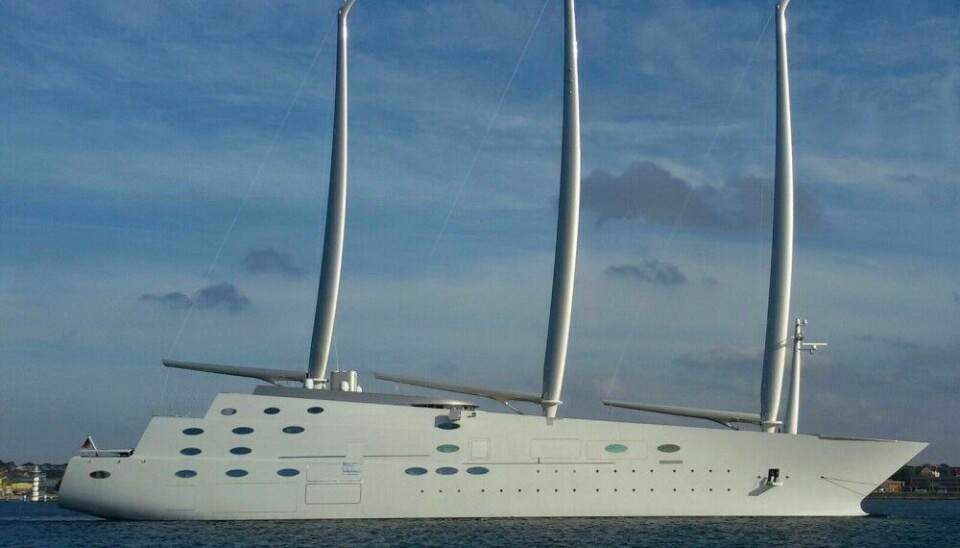
The tycoon, who is loyal to the Kremlin, has a net worth of $20.4 billion. This wealth has allowed him to build the world’s largest sailing yacht, the A, and acquire a major collection of Impressionist art, including pieces by Claude Monet, according to Forbes.
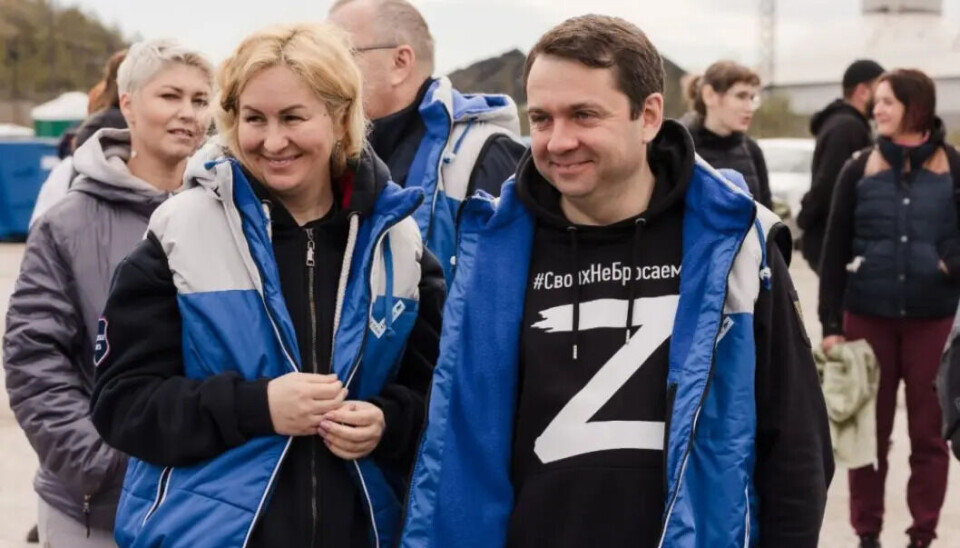
This week, the oligarch sat down for talks with Murmansk Governor Andrei Chibis. The governor, known for his staunch support of the war in Ukraine and sanctioned by the international community, is seen smiling in a photo taken in Melnichenko’s Moscow office.
According to Chibis, the development of the so-called Murmansk Transport Hub, as well as Arctic container shipping, was on the agenda.
The two men reportedly also discussed the development of the Kovdor Mining and Processing Plant, a subsidiary of EuroChem and one of Melnichenko’s key assets in the region. The businessman is in the process of investing more than 100 billion rubles (€1.12 billion) in the company, which produces apatite, baddeleyite, and iron ore concentrate.
Melnichenko’s Kovdor plant has the largest open-pit mine in Russia, with a quarry more than 600 metres deep. Half of the city’s population works in the mine and ore processing.
Governor Chibis’ meeting in Moscow comes only a few days after Melnichenko published an essay in The Economist. In the essay, titled Why a Broken Russia Is Bad for the World (behind paywall), he warns against a scenario in which Russia ends up in chaos. According to the oligarch, Russia could either descend into chaos, become a vassal of the West, a vassal of China, or turn into another North Korea.
He argues that his country is a misunderstood great power whose sovereignty must be safeguarded and that the war in Ukraine resulted from a loss of mutual trust and shared security mechanisms.
The essay has been widely criticised by researchers and analysts.
In a commentary article, Nona Mikhelidze, senior fellow at the Italian Istituto Affari Internazionali (IAI), argues that Melnichenko’s essay "rather than offering a convincing blueprint for peace, revives an outdated vision of European security based on accommodating imperial powers at the expense of smaller states."
"Relations between Russia and the West did not deteriorate because trust mysteriously evaporated or because international institutions weakened on their own. They collapsed because Russia repeatedly violated the very principles on which post-Cold War European security had been constructed, culminating in the full-scale invasion of Ukraine in 2022," she writes.
Mikhelidze also criticises Melnichenko’s claim that the Ukrainian and Russian peoples "share a common historical space."
"Such language obscures centuries of imperial domination."
Former Ukrainian Prime Minister and Foreign Minister Arseniy Yatsenyuk also criticised Melnichenko.
"What disappointed me most was that the article contains not the slightest reference to Russia’s horrific and unjust war, to the suffering of millions, to the blood that has been shed, to the lives that have been lost, or to countless human tragedies. There is nothing about values. Nothing about humanity. Not the slightest trace of remorse," he wrote on X.
Melnichenko’s current residence is in Ras Al Khaimah, United Arab Emirates, according to Forbes. Previously, he lived for about two decades in Switzerland.


