

Editorial
Russian billionaire Vitaly Orlov’s lawsuit against the Barents Observer is absurd and dirty
In a surreal case filed with a British court, the Russian fishery tycoon puts the blame on our newspaper for damages inflicted on him by EU sanctions.

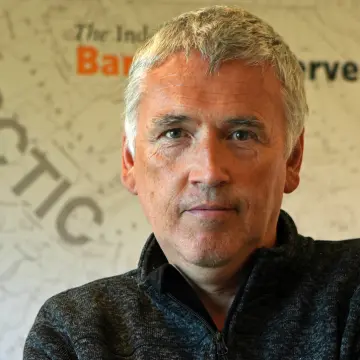
According to Vitaly Orlov, he is suffering "serious harm to his reputation" because of articles published by the Barents Observer.
The billionaire has repeatedly threatened our newspaper. The threats have now materialised in a lawsuit filed with the High Court of Justice in London.
Vitaly Orlov is based in Murmansk and has key parts of his business activities in the Barents Sea and the Arctic. He shuns public attention and rarely gives interviews or comments to the press.
On 24 September, a representative of Devonshire Solicitors, a London-based law firm that represents Orlov, showed up at the office of the Barents Observer in Kirkenes, northern Norway, without prior notice. The woman had travelled all the way from the UK to Kirkenes to physically hand over the court papers.
The claims are based on five news articles published by the Barents Observer in the period from 21 May 2025 to 7 January 2026. They all concern Norebo, the company that is 100% owned by Orlov, and cover the international sanctions imposed on the company on 20 May 2025.
In all the articles, we refer to the EU’s 17th Sanctions Package against Russia, in which Norebo is listed. According to the document from the EU Council, Norebo’s fishing vessels have been involved in Russian state intelligence activities.
About two months after the listing in the EU Sanctions Package, Norway followed suit and banned Norebo’s vessels from Norwegian ports and waters. Norebo subsequently took Norway to court, and this case is now coming up.
It is, of course, not the Barents Observer that has found a link between Norebo and Russian intelligence. We have only referred to the EU Council and its sanctions list. We could have added more text from the EU’s Sanctions Package, for example the following:
"Norebo JSC thus implements and supports actions by the Government of the Russian Federation, which undermine or threaten the security in the Union, several of its Member States and third countries by engaging in and supporting actions aimed at interfering with critical infrastructure, including submarine infrastructure."
The Barents Observer’s coverage of Norebo and the international sanctions is fully in line with normal reporting and internationally recognised journalism codes of ethics. All five articles in question are based on solid references to sources, including Norebo’s own press releases.
Clearly, Vitaly Orlov does not like the Barents Observer shedding light on his company and its activities. As a matter of fact, he is reportedly deeply troubled by the articles—not only economically, but also mentally. In the documents delivered to the court, Devonshire writes that "the Claimant’s reputation has been damaged, and he has been caused continuing distress, hurt and embarrassment."
The Barents Observer is based in a democratic country where independent journalism and freedom of the press are firmly rooted in the law and society. It is the responsibility and obligation of the press to report on critical developments.
That includes Russia’s biggest fishery company and its activities in the EU, Norway, and elsewhere.
What Vitaly Orlov’s lawsuit boils down to is that the richest man in the Russian fishery industry does not like the Barents Observer.
Orlov is specifically targeting our newspaper. He could have gone after the Norwegian broadcaster NRK, the newspapers DN and Fiskeribladet, or any of the many other media companies that have covered Norebo’s activities and its inclusion in the international sanctions lists. But the Russian billionaire chose to set his London-based lawyers on the Barents Observer.
This hardly comes as a surprise. Orlov knows that the Barents Observer is a small and financially vulnerable company. He wants us to waste our limited time and resources on an absurd case.
Consequently, we see his claims as a dirty attack on the freedom of the press and as an attempt to break our small and independent newspaper.
The billionaire demands that the Barents Observer pay him "damages." In addition, he also demands an injunction to restrain our newspaper from publishing "the same or similar imputations" in the future.
In other words, Vitaly Orlov demands that the Barents Observer stop writing about him—now and forever. His lawsuit is aimed at punishing and intimidating not only the Barents Observer, but also other media interested in covering his business activities.
Russia extensively uses intimidation as a tool to silence opponents. With a significant degree of success, this tool is applied not only domestically, but also against opponents abroad.
Over many years, the Barents Observer has grown used to attacks and threats from various actors in Russia. Following the start of the war against Ukraine in 2014, Russian authorities and services have actively tried to close us down. The attacks have targeted not only our company, but also our journalists. Half of our staff is now on Russia’s wanted list.
Threats, attacks, and Vitaly Orlov’s court case notwithstanding, the Barents Observer will never abandon its free and independent reporting.


