

Opinion
The Russian spirit of Norway’s "SmåRådina"
It’s not every day you receive a letter from a disappointed reader. Let alone several. Unfortunately, we did. And we decided it wasn’t just a good opportunity for reflection—it was a story worth sharing with our readers.
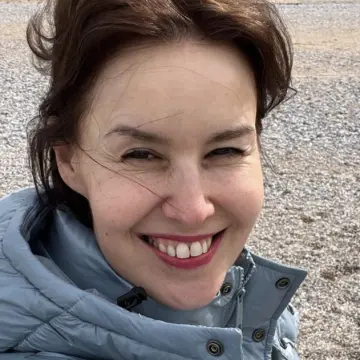
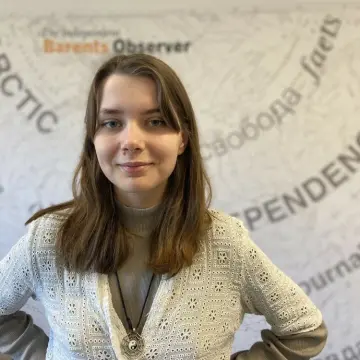
This opinion piece was originally published in the Russian version of the Barents Observer on July 30.
On 24 July, Russia’s Ministry of Justice added the Norwegian organisation SmåRådina to its list of "undesirable" groups. According to its website, SmåRådina "exposes and combats Putin’s propaganda in Norway, condemns Russia’s military aggression against Ukraine, amplifies the voices of anti-war Russians in Norwegian society, and promotes respect for human dignity, life, and rights in Russia."
Naturally, we decided to cover this—after all, they’re "our Norwegian activists." Journalist Olesia Krivtsova contacted the organisation’s leader, Evgenia Khoroltseva, for a comment. For the article’s illustration, we used a photo from SmåRådina’s official Facebook page, showing two activists holding a white-and-blue flag. The piece was published on our website on the evening of 28 July.
A few hours later, we received a message from SmåRådina’s Facebook account. The unnamed sender asked: "Is it okay to expose the face of someone who might face persecution… or do you just not care?"
Of course, we did care—though the tone of the message was enough to leave us stunned. But what surprised us even more was that the very same photo of the two activists with the white-and-blue flag was still publicly visible on SmåRådina’s official Facebook page. Our colleagues recognised one of the activists as a former Navalny campaign staffer from Arkhangelsk, who had fled Russia in 2022, lived in Kirkenes for several years, then moved to Oslo, where he was granted political asylum.
When we asked why the people in the photo faced "risk of persecution" because of our publication—while the image remained on SmåRådina’s Facebook—Khoroltseva replied that she and her team "simply haven’t had the time to clean up their social media."
Evgenia sent us three alternative photos to replace the original: one showed a group of Norwegian activists sitting under an AI-generated white-and-blue flag, while the other two were low-quality images of street protests in Oslo. We told her none of these worked, and in search of a better option, we returned to SmåRådina’s Facebook page. There, we found a perfect group photo: dozens of people in central Oslo holding anti-war posters and Ukrainian flags. The next morning, 29 July, we replaced the original image with this one.
A few hours later, our editorial inbox was flooded with messages from people demanding we immediately remove the new photo. Each claimed that our publication put them at risk of persecution. Among them were:
A young woman who wanted to visit her sick relative in Russia (sarcastically asking if we might "take pity on her for a few days").
One of SmåRådina’s leaders, whose name is listed in Norway’s Brønnøysund Register Centre—a public registry of all registered organisations in the country.
The very same "disappointed reader" who criticised our "lack of professionalism" and was so fearful of the supposed danger that she sent an anonymous email from Olesya.Krivtsova@outlook.com, an address suspiciously resembling the name of Barents Observer journalist and co-author of this column Olesia Krivtsova
Even a lawyer who "isn’t a member of SmåRådina but just happened to be at the event."
All of them insisted that, as journalists, we were obliged to protect their identities and safety under Norway’s Journalistic Code of Ethics, Copyright Act, and General Data Protection Regulation (GDPR).
Meanwhile, I kept receiving messages from SmåRådina’s account. Among other things, they told me that "no one is safe from Russian persecution, even in Europe—Norway included" and expressed surprise that we found it acceptable to publish "such photos IN AN ARTICLE ABOUT PERSECUTION BY RUSSIAN AUTHORITIES, while your own staff live here with asylum".
When I casually noted that none of the Barents Observer’s journalists have political asylum in Norway—unlike the SmåRådina activist—the response was that his "case was strong," and it wasn’t for me to judge.
The group photo of SmåRådina remained on the organisation’s official Facebook page until noon on 29 July. The absurdity of the situation left us dizzy.
Of course, we cannot publish someone’s photo against their will. So we removed the second image as well, replacing it with a new photo provided by Evgenia. But even after resolving the incident, questions lingered—so obvious they couldn’t be ignored. For example:
Why were the activists’ photos still publicly available on 29 July, when SmåRådina had been declared "undesirable" on the 24th?
What’s the point of open activism if you’re not prepared for the consequences? And why are you afraid of simply being recognised?
The answer likely lies in one of the emails we received from a "co-founder, former leader, current member, and long-time activist of SmåRådina." She admitted that some participants "still want to be able to visit their families back home," and that "publicly linking their faces to SmåRådina could deprive them of that opportunity." Her message stated: "Given the risk of political persecution and imprisonment for those pictured, we expect you to take swift action to resolve this situation."
"How lucky they are," we thought in the newsroom, since none of our Russian-speaking journalists can return home without risking imprisonment. All four of us are "foreign agents", Olesia and I have in absentia convictions, and the Barents Observer itself has been classified as "undesirable" for a year now. Then, each of us thought of our relatives still in Russia. I also recalled that in my eight years in the Czech Republic, I had never encountered local Russian-speaking activists who would hide their faces or demand that their photos be removed from media—they always protested openly. The same goes for activist communities in France and Poland.
"But that doesn’t mean everyone has to suffer like you do," members of SmåRådina and their supporters might say. And of course, they don’t. But there’s a catch.
In the group photo we removed, the activists were holding large pictures of Navalny and Nemtsov—men of exceptional courage and integrity. As you may recall, Navalny famously said: "I fear nothing—and I urge you to fear nothing." This phrase became a rallying cry for his supporters and a symbol of resistance against fear. How strange, then, that people who consider him their moral compass—and who live in free, democratic Norway—not only tremble in fear but are actively building a miniature model of modern Russia in Europe, complete with all-pervading, all-consuming fear and self-imposed restrictions. If the Russian authorities aim to intimidate those who fled, then in Norway, at least, they’ve succeeded brilliantly.
We would hate to see this model take root in other European countries, where activists might start erasing their photos from public posts or making excuses like "I was just standing nearby." As we bitterly joked in the newsroom, if Alexei and Boris were alive, they’d die of shame at the sight of such "followers."
Perhaps this episode will serve as a valuable lesson for activists in other countries. Remember: you can be labelled "undesirable" at any moment. So if you’re not sure of your principles, you might want to clean up your pages now. Keep in mind that Russian security services have already studied your photos long before you were designated. Know that displaying the white-and-blue flag can lead to both administrative and criminal prosecution ("extremist symbolism"). And don’t forget: it’s not journalists who are disrupting your comfortable way of life. Your enemy is someone else entirely—and right now, they’re delighted.
In other words: don’t play at activism. Learn to take responsibility—toward your fellow citizens, and ultimately, toward yourself.


