Seven bombers from Kola took part in massive strike; two missiles crashed in Poland
Poland’s Defence Minister, Władysław Kosiniak-Kamysz, confirmed that at least one of the two cruise missiles that came down within a few dozen kilometres from of the Ukrainian border was a Russian Kh-101.

The impacts of two cruise missiles and one drone were reported on Friday morning. Prime Minister Donald Tusk convened an emergency meeting with ministers and military commanders in response to Russia’s violation of Polish airspace.
Shortly afterwards, Defence Minister and Deputy Prime Minister Władysław Kosiniak-Kamysz said at a press briefing in Warsaw: “I will approach our allies and ask them to recognise what we have been facing here every day, every week and every month for four years. The threat to NATO and the provocations from Russia are very serious.”
Kh-101 cruise missiles are carried by Tu-160 and Tu-95MS strategic bombers. According to the Ukrainian Air Force, 12 such aircraft were airborne and took part in Russia’s massive aerial assault on Ukraine overnight on 20 November.
W związku z naruszeniem polskiej przestrzeni powietrznej zwołałem naradę z udziałem ministrów, przedstawicieli Wojska Polskiego oraz szefów służb. https://t.co/rlK79MJl02
— Donald Tusk (@donaldtusk) November 20, 2026
While the five Tu-160s reportedly departed from Ukrainka Air Base in Amur Oblast, in Russia’s Far East, all seven Tu-95MS bombers took off from Olenya Air Base on the Kola Peninsula.
According to the open-source intelligence group AviVector, the seven Tu-95MS bombers were redeployed to Olenya Air Base on Thursday. All had come from Ukrainka: four flew directly to the Kola Peninsula, while the remaining three stopped for refuelling at Engels-2 Air Base in Saratov Oblast before continuing north.
Following a successful Ukrainian special forces drone attack on Olenya Air Base last spring, Russian military aviation has increasingly used the facility to deploy bombers on the day before sorties against Ukraine. The aircraft are armed with Kh-101 cruise missiles shortly before take-off.
Ukrainian President Volodymyr Zelenskyy said on X that since last night, Russia has launched more than 400 attack drones and over 110 missiles, 27 of them ballistic. The Russians spread this attack across many cities and regions of Ukraine.
"Absolutely all the targets were ordinary civilian infrastructure – things that literally sustain people’s lives," he said.
No one was injured when the Russian cruise missile crashed in a field near Nowy Lipowiec, in Poland’s Lublin region, early on Friday morning.
The Kh-101 has an estimated range of around 3,500 kilometres and reportedly flew across Ukraine before crashing on Polish territory. The missile normally carries a conventional warhead weighing approximately 400 kilograms.
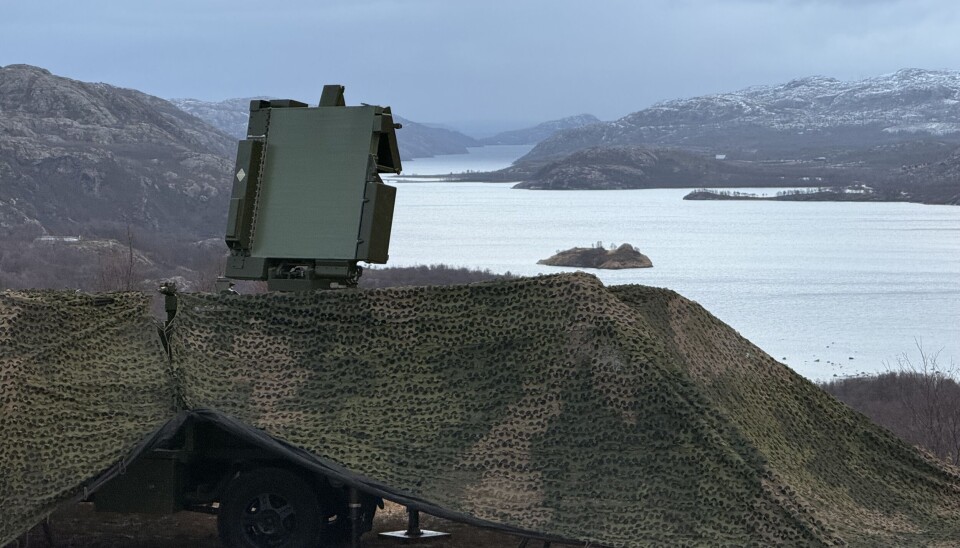
Earlier in November, Norway deployed a NASAMS sensor system near its northern border with Russia to track drones that stray off course.
Defence Minister Tore O. Sandvik subsequently told the Barents Observer that Norway was prepared for different scenarios and had the capabilities to deal with them. These included the possibility of Russia taking control of Ukrainian drones and deliberately sending them into eastern Finnmark as part of a false-flag operation.