
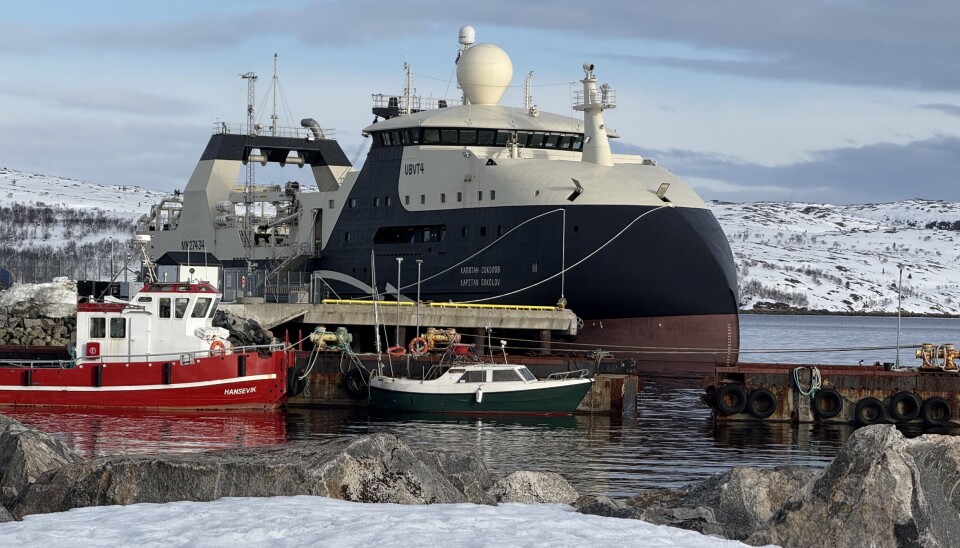
Vitaly Orlov’s fishing conglomerate loses lawsuit against Norway
A Norwegian court has ruled in favour of the state in a lawsuit brought by Russian fishing giant Norebo and nine of its subsidiaries, rejecting their challenge to Norway’s decision to deny them fishing licences in the country’s exclusive economic zone (EEZ). The companies were listed over alleged involvement in Russian state-sponsored surveillance and intelligence activities targeting critical underwater infrastructure.

The Oslo District Court handed down its judgment on 17 November, concluding that “the fisheries agreement [between Norway and Russia] does not, therefore, preclude the application of sanctions”.
Norebo was added to the European Union’s 17th sanctions package in May 2025, as part of measures aimed at limiting Russia’s capacity to conduct hybrid activities. Norway aligned itself with the EU listings in July that year, stating that “these listings support Norway’s security policy interests”.
The Murmansk-based fishing conglomerate and nine of its subsidiaries, all of which had applied for fishing licences in the Norwegian EEZ, asked the court to overturn Norway’s decision to deny them access to the fishing grounds. They argued that the decision was incompatible with the fisheries agreement between Norway and Russia.
In addition to losing access to fishing licences in the Norwegian EEZ, Norebo vessels have been barred from Norwegian ports and territorial waters. As a general rule, fishing licences in the Norwegian EEZ will not be granted to vessels belonging to the listed companies.
Lawyer Hallvard Østgård, representing the Russian companies in the Oslo District Court proceedings, told the Barents Observer: “We will review the judgment thoroughly. Thereafter, the client will decide whether or not to appeal.”
Norebo, based in Murmansk, has not responded to the Barents Observer’s questions since the ruling was made public on Thursday morning.
One of Norebo’s key arguments concerned the distinction between territorial waters and the exclusive economic zone. The company argued that sanctions should not apply to vessels operating more than 12 nautical miles from the coast, beyond Norway’s territorial waters.
David Magnus Myr of the Office of the Attorney General (Regjeringsadvokaten), which represented the state, told Norwegian public broadcaster NRK:
“The court ruled in favour of the state on all points and agreed that the case must be seen against a serious backdrop. The Russian fishing company’s argument that Norwegian authorities were obliged to grant it fishing licences because its vessels would operate outside Norwegian territory was unsuccessful.”

A second Murmansk-based fishing company, Murman Seafood, was listed by both the EU and Norway on similar grounds. It has not, however, brought a lawsuit against the Norwegian state, represented in the Norebo case by the Ministry of Trade, Industry and Fisheries.
The EU and Norway said the listings of Norebo and Murman Seafood were part of a sanctions framework designed to counter Russian hybrid activities.
“The aim is to limit Russia’s room for manoeuvre by countering aggressive hybrid campaigns against allies, such as sabotage, cable cuts, cyber activities, disinformation and attempts to undermine fundamental democratic values,” the Norwegian Government said in a statement at the time.
Norebo co-founder and majority owner Vitaly Orlov filed a separate lawsuit against the Barents Observer earlier this year, seeking damages and an injunction over the news website’s reporting on the sanctions imposed on his companies by the EU and Norway.
Unlike Norebo’s case against the Norwegian state, which was heard by the Oslo District Court, Orlov’s lawsuit against the Barents Observer was filed with the High Court of Justice in London.
Orlov has not personally been sanctioned by either the United Kingdom, or Norway, but is subject to sanctions by Ukraine.
The Murmansk-based billionaire moved to Norway in 1996 and lived there until 2014. He gave up his Norwegian citizenship when he moved back to Russia.


